

Board Performance · 2025
In this section15 topics
- Compliance Monitoring — Overview1 item
- Prevention of Conflicts of Interest3 items
- Prevention of the Use of Inside Information3 items
- Anti-Corruption6 items
- Whistleblowing5 items
- Selection of Directors & Chief Executives5 items
- Selection of Independent Directors2 items
- Director Development1 item
- Evaluation of Board & Subcommittee Performance3 items
- Subcommittees1 item
- Meeting Attendance & Remuneration3 items
- Supervision of Subsidiaries & Associated Companies4 items
- Board Duty Performance — Overview1 item
- Audit Committee Duty Performance1 item
- Executive Committee Duty Performance1 item
Compliance Monitoring — Overview
Monitoring of Compliance with Other CG Policies & Guidelines
The Review of Tax Policy
The Board of Directors has reviewed the Company's tax policy to be consistent with the current situation and adhere to the principles of honesty, transparency, as well as promoting long-term business competition. The policy on tax is disclosed on the Company's website (www.sritranggroup.com/en/cg/important-policies)
Prevention of Conflicts of Interest
Has the Company Acted to Prevent Conflicts of Interest?
Yes
Operations in the Past Year
Conflict of Interest
The Board of Directors of STA has established a policy for preventing any conflict of interest on the basis that any decision-making on business transactions must be made only for the best interest of STA, and that any act which may cause a conflict of interest should be avoided. It is required that a person involved in or having a conflict of interest in any agenda item to be discussed in a meeting shall report the relationship or conflict of interest in such agenda item to STA, as well as abstain from voting and shall have no authority to approve such transaction. For any transactions that are related to any director of the Company, that particular director does not have the right to vote on such transactions. The Board also has established a policy that prohibits management and staff from utilizing inside information for personal use.
In 2025, the Company has communicated the conflict of interest policy to directors, executives and employees via email and disseminating through the Company's intranet system, including organizing online training to create correct knowledge and understanding through the "Corporate Governance (CG Day)" course, setting a target for 100% of directors, executives and employees to receive training and requiring those who attend the training to pass the knowledge test criteria of at least 70%. In 2025, 100% of directors, executives and employees passed the training.
Conflict of Interest Report Preparation
The Board of Directors is provided the disclosures to prevent conflicts of interest and activities that may cause conflicts of interest, illegal and inappropriate activities. The Directors, Executives, and the permanent employees must prepare their report of the lists of the suspect which may be themself or their relatives who related in their family that was suspected to have any conflict of interest annually. In 2025, there were not find any significant conflict of interest among Directors, Executives, and permanent employees.
The policy on the prevention of conflict of interest is disclosed on the Company's website (https://www.sritranggroup.com/storage/downloads/cg/important-policies/20211124-policy-for-the-prevention-of-conflict-of-interests-en.pdf).
Number of Conflict-of-Interest Cases
| Metric | Current Year | Previous Year | Two Years Ago |
|---|---|---|---|
| Total number of cases or issues related to conflicts of interest (cases) | 0 | 0 | 0 |
Prevention of the Use of Inside Information
Has the Company Acted to Prevent the Use of Inside Information?
Yes
Operations in the Past Year
Policy for the Use of Inside Information
STA and its subsidiaries operate the business with transparency and are aware of the importance of the use of inside information. To comply with the Securities and Exchange Act, B.E. 2535 (as amended) (the ‘SEC Act’) including relevant rules and regulations, the Company sets out this policy for the use of inside information and measures to prevent the disclosure or use of confidential and/or non-public inside information of the Company by directors and executives including those holding an executive position in accounting or finance at the level of division manager or higher including employees of the Company and its subsidiaries for their benefits or others’ benefit, either directly or indirectly and irrespective of whether such disclosure or use of confidential and/or inside information would be for consideration. This also extends to the use of inside information for securities trading. The Company has the Board of Directors and senior executives signed as an acknowledgment of the aforementioned policy.
In addition, the Company Secretary has notified directors, executives, and related employees in writing every time to refrain from trading in the Company's securities for at least one month before the disclosure of information to the public and should wait at least 24 hours after the disclosure to the public. Then, it will be able to do the above list including prohibiting the disclosure of such material information to other persons by any means.
In 2025, the Company has published a policy on the use of inside information via email and through the company's Intranet system. There has been a training course, “Corporate Governance (CG Day)” to provide knowledge to directors, executives, and all employees throughout the organization about the prevention of the use of inside information. In addition, directors and senior executives have signed to acknowledge the said policy and strictly followed throughout the year. There were no cases of stock trading using inside information.
The policy on the use of insider information is disclosed on the Company's website (https://www.sritranggroup.com/storage/downloads/cg/important-policies/20211124-policy-for-the-use-of-inside-information-en.pdf).
Number of Inside-Information Cases
| Metric | Current Year | Previous Year | Two Years Ago |
|---|---|---|---|
| Total number of cases or issues related to the use of inside information to seek benefits (cases) | 0 | 0 | 0 |
Anti-Corruption
Has the Company Acted on Anti-Corruption?
Yes
Operations in the Past Year
The Company places great importance on corporate governance, ensuring operations are conducted with transparency and a zero-tolerance approach to all forms of corruption. The Board of Directors has assigned the Corporate Governance Committee to establish anti-corruption policies and monitor compliance with these policies, aiming to create transparent, verifiable practices and foster a corporate culture that prevents corruption. In 2025, the Company undertook activities to promote good corporate governance, business ethics, and anti-corruption measures as follows:
The Company regularly reviews its anti-corruption policy and communicates it to directors, executives, and employees via email and the Company’s Intranet. The policy is reviewed annually to ensure it remains comprehensive and addresses potential risks of corruption in the Company’s operations, including facilitation payments, political contributions, and charitable donations. Appropriate guidelines have been established to prevent risks associated with such activities, and the policy applies to all subsidiaries.
The Company organizes training for directors, executives, and employees to ensure proper understanding of the anti-corruption policy through the “Good Corporate Governance” program (CG Day). The training targets 100% participation of employees, and participants - including directors, executives, and employees - must achieve a minimum score of 70% in knowledge assessments. In 2025, 100% of participants successfully completed the training. The program also covers policies on conflict of interest, insider information, gift acceptance, whistleblowing, and protection of whistleblowers, helping employees gain knowledge and apply it correctly in practice.
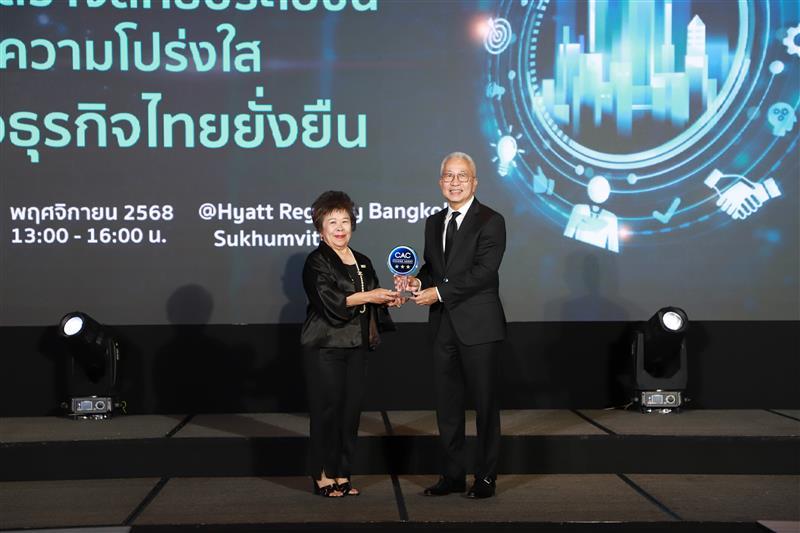
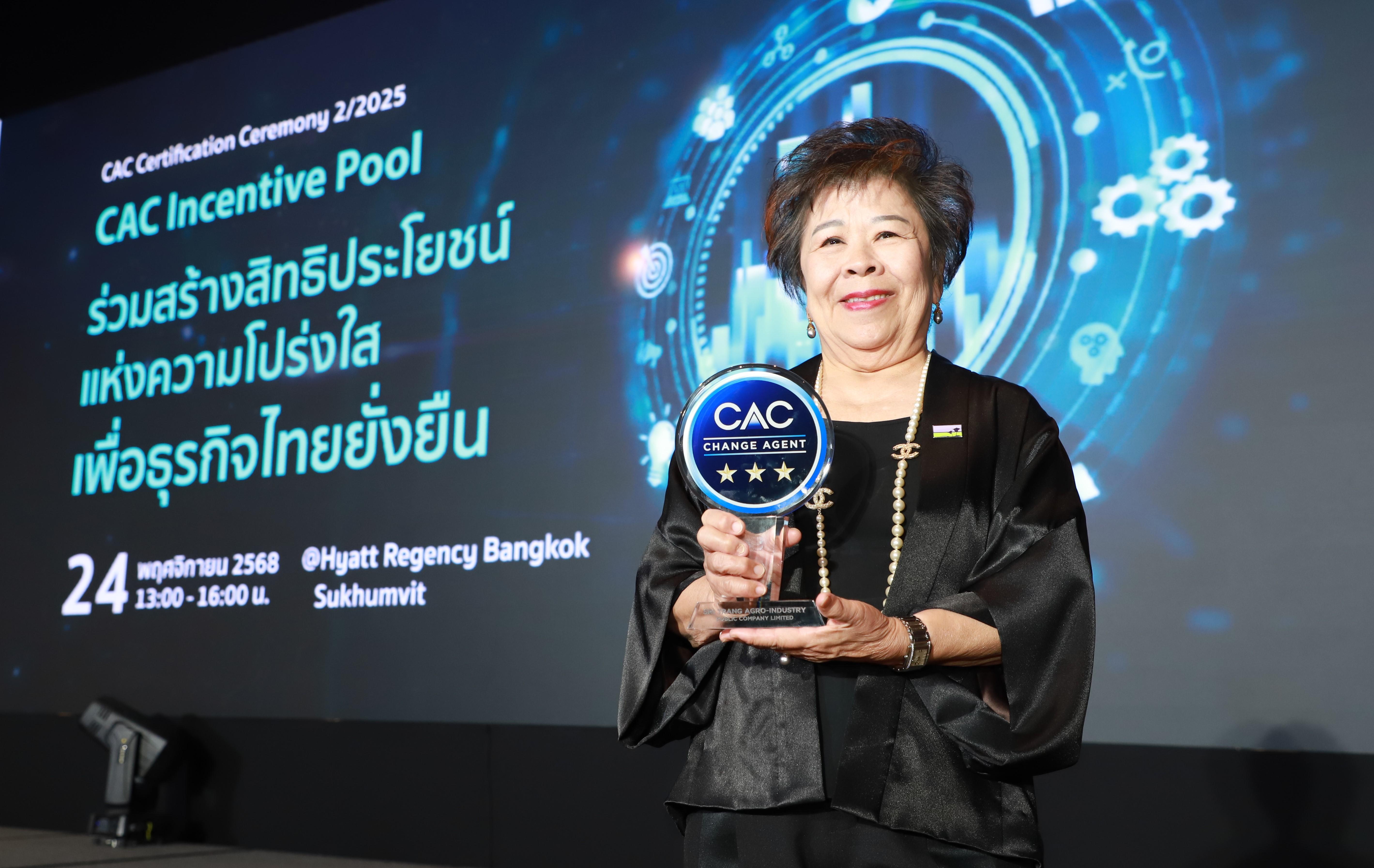
The Company has been a member of the Thai Private Sector Collective Action Against Corruption (CAC) since 2018, conducting business with transparency continuously. In 2025, the Company participated in the CAC Change Agent program and received the CAC Change Agent Award for the third consecutive year, demonstrating its commitment to promoting transparent business practices among its business partners by encouraging them to join the anti-corruption network, thereby fostering sustainability throughout the supply chain and building confidence among all stakeholders.
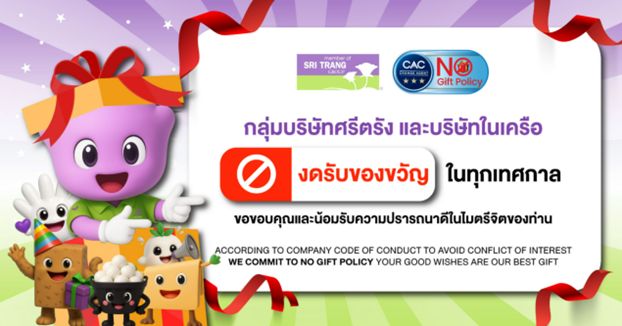
The Company has also implemented a No Gift Policy during the New Year and other occasions, communicated via the Company website (www.sritranggroup.com) and internal and external channels, such as promotional materials displayed throughout all factories and on the Intranet, to consistently convey this commitment to all stakeholders, including business partners, customers, subsidiaries, and external parties.
The Company assesses risks of internal and external corruption to prevent and combat corrupt practices. Risk analyses identify potential impacts on business operations, determine the level of risk, and develop appropriate management measures, with results reported to management and relevant committees.
Internal audits are conducted to ensure that the internal control and risk management systems support the achievement of Company objectives and compliance with regulations, business ethics, and the anti-corruption policy. The internal audit function, independent and reporting directly to the Audit Committee, monitors and reports audit results, providing recommendations to enhance operational effectiveness and efficiency, free from corruption, in accordance with good corporate governance practices. For more details, please refer to the Company’s “Anti-Corruption Policy” and the “Guidelines for Compliance with the Anti-Corruption Policy” at https://www.sritranggroup.com/en/cg/important-policies
Form of Anti-Corruption Operations
| Operation |
|---|
| Review of appropriateness in anti-corruption |
| The participation in anti-corruption projects |
| Assessment and identification of corruption risk |
| Communication and training for employees on anti-corruption policy and guidelines |
| The monitoring of the evaluation of compliance with the anti- corruption policy |
| Review of the completeness and adequacy of the process by the Audit Committee or auditor |
Number of Corruption Cases — Introduction
From complaints received through the Whistleblowing channel, issues related to corruption were identified. The Company conducted thorough investigations, imposed appropriate disciplinary actions on the individuals involved, and established corrective measures to prevent recurrence.
Number of Corruption Cases
| Metric | Current Year | Previous Year | Two Years Ago |
|---|---|---|---|
| Total number of cases or issues related to corruption (cases) | 0 | 1 | 2 |
Details of Corruption Cases
| Status | Period Type | Start of Period | End of Period | Details of the Case or Issue | Investigation Results | Corrective Actions |
|---|---|---|---|---|---|---|
| Incident no longer subject to action | month/year Range | 2024-01 | 2024-01 | Certain employees did not adhere to the Company’s established rules and work
regulations. | It was identified that an employee received inappropriate benefits from suppliers. | -Access rights to information were appropriately assigned in alignment with
employees’ roles and responsibilities.
-Employees were duly informed to ensure their understanding of, and awareness
of the importance of, compliance with established policies and procedures,
including applicable disciplinary actions for non-compliance.
-New employees underwent proper training to ensure adequate knowledge and
understanding of correct operating procedures, with close supervision and follow up
evaluations conducted accordingly.
-Job rotation was implemented for employees in key positions. |
Whistleblowing
Has the Company Implemented Whistleblowing Procedures?
Yes
Operations in the Past Year
The Company has committed to conducting business with transparency, integrity, and accountability. It is aligned with the principles of good governance and expects all stakeholders to report any incidents that may violate these principles in order to take corrective action.
The Company has a policy for whistleblowing and protecting the whistleblowers to ensure that complaints are handled efficiently. The Company provides various channels for receiving complaints made by any stakeholders regarding any unethical actions, misbehavior, suspected violation of laws, regulations, and ethical business practices, corruption, as well as incorrect financial reporting and defective internal controls which may cause damage to the Company as well as establishing measures to protect complainants acting in good faith.
Channels
Complaints can be submitted through the following channels;
Channel 1 By post or submit directly to
Company Secretary, Sri Trang Agro-Industry Public Company Limited.
17th Floor, Park Ventures Ecoplex, Unit 1701, 1707-1712
57 Wireless Road, Lumpini, Pathumwan, Bangkok 10330
Channel 2 By Telephone at +662 207-4590
Channel 3 By E-mail at E-Mail address : corporatesecretary@sritranggroup.com
Channel 4 By directly reporting to the units responsible for that issue
These whistleblowing channels are informed to our employees via internal training sessions and email and are published on STA’s website for external stakeholders to be acknowledge as well.
To protect the rights of whistleblowers who act in good faith, the Company ensures that personnel responsible for handling complaints within the Group maintain the confidentiality of the whistleblower’s identity and information provided. Whistleblowers will be granted appropriate protection, including but not limited to no changes in job responsibilities, workplace, position, and no intimidation, dismissal, or any unfair treatment throughout the complaint handling process, even if such actions may result in potential business losses for the Group.
Any persons who become aware of the complaint or related information must keep such information strictly confidential and must not disclose it to any third parties, except where disclosure is required by law. In the event of intentional disclosure, the Group will take disciplinary actions in accordance with its internal regulations and/or pursue legal actions, as appropriate.
In 2025, the Company monitored all complaints in accordance with its established whistleblowing procedures and found no complaints involving violations of the Code of Conduct or non-compliance with the anti-corruption policy. Nevertheless, the Board of Directors and the Audit Committee place strong emphasis on the anti-corruption policy by promoting ethical awareness, fostering appropriate corporate values, and ensuring that multiple, robust, and effective whistleblowing channels are in place. The Company also promotes continuous improvement processes to prevent recurrence of potential issues. All types of complaints are required to receive an initial response in a timely manner, demonstrating the Company’s strong commitment to effective complaint management.
The whistleblowing policy is publicly disclosed on the Company’s website at https://www.sritranggroup.com/en/cg/good-cg/whistle-blowing
Number of Whistleblowing Cases — Introduction
In the past 3 years, the Company has received complaints through the whistleblowing channels, with key issues summarized as follows:
Number of Whistleblowing Cases
| Metric | Current Year | Previous Year | Two Years Ago |
|---|---|---|---|
| Total number of cases or issues received through whistleblowing channels (cases) | 10 | 12 | 19 |
Details of Whistleblowing Cases
| Status | Period Type | Start of Period | End of Period | Details of the Case or Issue | Investigation Results | Corrective Actions | Case or Issue |
|---|---|---|---|---|---|---|---|
| Incident no longer subject to action | month/year Range | 2025-03 | 2025-03 | Engaging in Unfair Competition with Business Partners | Suppliers have a misunderstanding regarding the product specifications required by the Company. | - Communicate clearly with business partners regarding product characteristics by establishing clear and written product specifications, and ensure that the same information is communicated equally to all suppliers.
- Communicate with non-selected suppliers by providing both technical and quality-related reasons, highlighting areas for improvement to ensure mutual understanding that the decision is based on business considerations and not discriminatory practices. | 3188 · Description: Anti-unfair competitiveness |
| Incident no longer subject to action | month/year Range | 2025-01 | 2025-08 | Compliance with Applicable Laws and Regulations | There was no clear evidence to support the allegation that the employee failed to comply with the applicable regulations as specified in the complaint. | As a preventive measure against potential non-compliance, the Company has strengthened communication and reiterated relevant regulations to ensure employees have a clear and consistent understanding of the applicable rules. | 3190 · Description: Compliance with laws, regulations, and rules |
Selection of Directors & Chief Executives
Are Directors Selected Through the Nomination Committee?
Yes
Are Chief Executives Selected Through the Nomination Committee?
Yes
Number of Directors from Major Shareholders
0
Rights of Minority Shareholders on Director Appointment
In 2025, the Company has not yet provided an opportunity for shareholders to nominate individuals for selection as directors
Method of Director Appointment
| Method |
|---|
| Method whereby each director requires approval votes more than half of the votes of attending shareholders with voting rights |
Selection of Independent Directors
Criteria for Selecting Independent Directors
Qualifications of Independent Directors
Holding shares not exceeding 1 percent of the total number of shares with voting rights of STA, its parent company, subsidiary company, associate company, or a major shareholder or controlling person of STA, including shares held by related persons of such Independent Director;
Not having any relationship with (a) STA; (b) STA's holding company, subsidiary, or a subsidiary of STA; (c) any person who has an interest who holds not less than 10 percent of the total voting shares in STA; and/or (d) any officers of STA who can interfere with the exercise of any Director's independent judgment;
Neither being nor having an immediate family member who (which includes spouse, child, adopted child, stepchild, and parents)is or was, in the current or immediate past financial year, a 10 percent shareholder of, or a partner in (with 10 percent or more stake), or an executive officer of, or a Director of, any organization to which STA or any of its subsidiaries made, or from which STA or any of its subsidiaries received, significant payments or material services (which may include auditing, banking, consulting and legal services), in the current or immediate past financial year;
Not being or having been directly associated with a shareholder who holds more than 10 percent of the shares of STA in the current or immediately preceding financial year;
Not being or having been an Executive Director, employee, staff, advisor who receives a salary, or a controlling person of STA, its parent company, subsidiary company, associate company, same-level subsidiary company, major shareholder or controlling person of STA, unless the foregoing status ended not less than 3 financial years before the appointment as an Independent Director. Such prohibited characteristics shall not include the case where the Independent Director used to be a government official or advisor of a government unit that was a major shareholder or controlling person of STA;
Not being a person related by blood or legal registration as father, mother, spouse, sibling, and child, including the spouse’s child, of a Director, executive, major shareholder, controlling person, or person to be nominated as Director, executive or controlling person of STA or its subsidiaries;
Not having an immediate family member including spouse, child, adopted child, stepchild, child of spouse, sibling, and parent, who is, or has been in any of the past 3 financial years, employed by STA or any of its related companies and whose remuneration is or was determined by the Remuneration Committee;
Not being a Director or having an immediate family member including spouse, child, adopted child, stepchild, child of a spouse, sibling, and parent who accepts or has accepted compensation from STA or any of its related companies for the provision of services, other than services as a Director, for the current or immediately preceding financial year;
Not having or having had a business relationship with STA, its parent company, subsidiary company, associate company, major shareholder or controlling person, in a manner which might interfere with his/her independent judgment, and not being or having been a significant shareholder, or controlling person of any person having a business relationship with STA, its parent company, subsidiary company, associate company, major shareholder or controlling person, unless the foregoing relationship ended not less than 2 years before the appointment as an Independent Director;
Not being or having been an auditor of STA, its parent company, subsidiary company, associate company, major shareholder or controlling person, and not being a significant shareholder, controlling person, or partner of an audit firm that employs an auditor of STA, its parent company, subsidiary company, associate company, major shareholder or controlling person, unless the foregoing relationship ended not less than 2 years before the appointment as an Independent Director;
Not being or having been a provider of any professional services, legal advisor, or financial advisor who receives or received service fees exceeding 2 million baht per year from STA, parent company, subsidiary company, associate company, major shareholder, or controlling person, and not being a significant shareholder, controlling person or partner of the provider of such professional services, unless the foregoing relationship ended not less than 2 years before the appointment as an Independent Director;
Not being a Director appointed as representative of Directors of STA, a major shareholder or a shareholder who is related to a major shareholder of STA, or a Director who is or has been directly associated with a shareholder who holds not less than 10% of the shares of STA in the current or immediately preceding financial year. A Director will be considered "directly associated" with a shareholder who holds not less than 10 percent or more of the share of STA when the Director is accustomed to or under obligation, whether formal or informal, to act following the directions, instructions, or wishes of such shareholder about the corporate affairs of STA;
Not undertaking any business that is of the same nature as and in competition to the business of STA or its subsidiary company, and not being a significant partner in a partnership or being an Executive Director, employee, staff, advisor who receives a salary or holds shares exceeding 1 percent of the total number of shares with voting rights of any other company that engages in business that is of the same nature as and in competition to the business of STA or its subsidiary company;
Not having any other characteristic that could cause the inability to express independent opinions about the business operations of STA.
The qualifications of the Independent Director of STA are more stringent than the definitions as specified in the notification of the Capital Market Supervisory Board. In 2025 , none of Independent Director has been in the position beyond 9 years.
STA Board of Directors has considered and assigned the Nomination Committee to be the reviewer of the criteria and methods for searching qualified persons to be appointed as an Independent Director. For the consideration of qualifications and prohibited characteristics, the Company has followed the Public Company Limited Act, Securities and Exchange Act, the Capital Market Committee announcement, related announcement, rules and/or regulations, including the qualifications of the Company’s Independent Directors. Furthermore, to recruit a qualified Board of Directors, the Company has considered from knowledge, expertise and experience, skill matrix, and Director’s pool from the reliable organization. Further, the Nomination Committee will consider the qualifications of the directors in various aspects such as legal qualifications, related rules, expertise, and experience which are beneficial to the Company’s direction and strategies. In addition, the consideration has been considered by the board diversity policy, knowledge, abilities, skills, experience, age, gender, race, or any other distinction to conclude and present to the Board of Directors and/or Annual General Meeting to consider and resolve the representative to be the independent director. In addition, the Company had the policy to determine the number of Independent Directors at least one-third of the total number of Directors and must not be less than 3.
Did Any Independent Director Have a Business or Professional Relationship?
No
Director Development
Qualifications for Director Selection
| Qualification | Skill & Expertise |
|---|---|
| 1. Possesses qualifications in compliance with applicable laws and regulations, such as the Public Limited Companies Act, the Securities and Exchange Act, and the Company’s Articles of Association. 2. Has knowledge, capability, and experience that are beneficial to the Company’s business operations. 3. Demonstrates leadership qualities and upholds integrity and ethical standards. | 113 · Description: Agribusiness · 143 · Description: Accounting · 147 · Description: Sustainability · 265 · Description: Governance/ Compliance · 1683 · Description: Business Administration |
Evaluation of Board & Subcommittee Performance
Criteria for Evaluating Board Performance
The Company places importance on the evaluation of Board effectiveness as a key mechanism under the principles of good corporate governance. The Board performance evaluation is conducted annually and covers the following:
The Board of Directors as a whole
Individual directors (Self-Assessment)
All sub-committees
CEO Performance Evaluation
This process is aligned with the requirements of the Stock Exchange of Thailand (SET) and the guidelines of the Thai Institute of Directors (IOD), which constitute key elements in the Corporate Governance Report (CGR) assessment.
Evaluation Criteria in Alignment with CGR Requirements
1. Board Evaluation The evaluation covers key areas under the CG Code, including:
Appropriateness of Board structure, composition, and diversity
Clarity of roles, duties, and responsibilities
Effectiveness of Board meetings and quality of information provided
Strategic oversight and monitoring of performance
Balance and relationship with management
Continuous development of directors’ capabilities
2. Individual Director Assessment This assessment focuses on individual accountability and effective participation, including:
Qualifications, knowledge, and expertise
Availability and time commitment
Participation in discussions and decision-making
Independence of judgment
Collaboration with other directors and management
3. Sub-Committee Evaluation All sub-committees are evaluated in terms of the appropriateness of:
Structure and composition
Scope of duties and responsibilities (charter alignment)
Meeting effectiveness
Quality of reporting to the Board of Directors
These elements reflect the quality of the governance structure in accordance with CGR criteria.
4. CEO Performance Evaluation The Board conducts an annual evaluation of the CEO’s performance, covering ten key areas, including leadership, strategy formulation and execution, financial performance, human resource management, stakeholder relations, and succession planning. This evaluation reflects the Board’s role in monitoring management performance in accordance with the CG Code.
Scoring Criteria and Transparency The Company applies a scoring system ranging from 0 to 4 and converts the results into a percentage of the total score, with clearly defined performance levels to ensure measurable and comparable outcomes:
≥ 90% = Excellent
≥ 80% = Very Good
≥ 70% = Good
≥ 60% = Fair
< 60% = Needs Improvement
Evaluation Process The Company Secretary’s Office is responsible for compiling, analyzing, and reporting the evaluation results to the Board of Directors for consideration and continuous improvement. The annual evaluation results were presented to the Board of Directors on 3 February 2026.
Utilization of Evaluation Results The Company uses the evaluation results as supporting information to:
Enhance Board composition and skill sets
Review roles, responsibilities, and meeting processes
Strengthen strategic oversight
This is to continuously elevate governance standards in line with best practices and CGR assessment criteria.
Evaluation of Board Performance in the Past Year
The performance evaluation results indicated that the Board of Directors and all sub-committees were assessed at an “Excellent” level, whereas the Chief Executive Officer (CEO) was assessed at a “Very Good” level.
Evaluation Results
| Evaluated Body | Group — Carried Out? | Group — Grade / Average Score | Group — Grade / Full Score | Individual (Self-Assessment) — Carried Out? | Individual (Self-Assessment) — Grade / Average Score | Individual (Self-Assessment) — Grade / Full Score | Cross (Assessing Other Directors) — Carried Out? |
|---|---|---|---|---|---|---|---|
| Board Of Director | Y | 96.97 | 100 | Y | 96.52 | 100 | N |
| Audit Committee | Y | 97.50 | 100 | N | N | ||
| Other Subcommittee | Y | 97.06 | 100 | N | N | ||
| Other Subcommittee | Y | 96.67 | 100 | N | N | ||
| Other Subcommittee | Y | 95.00 | 100 | N | N | ||
| Other Subcommittee | Y | 99.44 | 100 | N | N | ||
| Other Subcommittee | Y | 93.38 | 100 | N | N |
Subcommittees
Subcommittees
| Results of the Subcommittee's Duty Performance |
|---|
During the year 2025, the Remuneration Committee held a total of 2 meetings, both conducted electronically. All committee members attended every meeting, representing 100% attendance. The Committee focused on considering the remuneration of senior executives in accordance with the established policy and criteria, taking into account the Company’s performance, the competitive business environment, and performance-based incentives that encourage quality and creative work, while remaining within the approved budget. This was carried out in accordance with good corporate governance principles. In addition, the Committee reviewed the self-assessment of the Remuneration Committee to propose operational improvements for alignment with best practices. Regarding the determination of directors’ remuneration, as detailed under the section “Remuneration of the Board of Directors” in the Company’s 2025 Annual Report, the Committee concluded that it had fully performed its duties and responsibilities as assigned, in line with the Company’s remuneration policies and criteria, taking into account the Company’s performance, economic conditions, and the overall competitive environment. |
During the year 2025, the Nomination Committee held a total of two meetings, comprising one physical meeting and one meeting via electronic media. All committee members attended every meeting, representing 100% attendance. The Committee performed its duties as assigned by the Board of Directors and has updated its operational guidelines to ensure they remain current and in alignment with good corporate governance principles. The Committee considered the following key matters:
The Nomination Committee remains committed to performing its duties with transparency, diligence, and fairness, to ensure the company can grow in a stable and sustainable manner, while safeguarding the interests of shareholders and all stakeholders. |
The Risk Management Committee has performed its duties within the scope of responsibility as assigned by the Board of Directors and as mandated by the Risk Management Committee Charter, which requires at least 4 meetings shall be held per year and special meetings can be held as appropriate. In 2025, the Risk Management Committee regularly held 4 meetings through Electronic Media with all committee members attending every meeting, representing 100%. The meeting results can be summarized as follows:
|
During the year 2025, the Corporate Governance Committee performed its duties as assigned by the Board of Directors. The Committee convened a total of 2 meetings via electronic means, with full attendance by all members, representing 100 percent attendance. The Committee’s key activities were as follows:
The Corporate Governance Committee is committed to conducting business and managing operations in accordance with good corporate governance principles, while being mindful of social and environmental responsibilities, to ensure the company’s sustainable growth. |
In 2025, the Sustainability Development Committee held a total of 4 electronic meetings, with all members attending all meetings, representing a 100% attendance rate. The key matters and responsibilities of the Sustainability Development Committee can be summarized as follows:
|
Meeting Attendance & Remuneration
Meeting Attendance — Sub-section Introduction
In 2025, the Board of Directors held a total of 7 meetings, all of which were conducted via electronic meetings
Types of Remuneration of the Board of Directors
At the 2025 Annual General Meeting of Shareholders, held on 9 April 2025, the meeting resolved to approve the remuneration and meeting allowances for the year 2025 not more than 14,850,000 Baht
Remuneration or Benefits Payable to the Board
| Metric | Amount (Baht) |
|---|---|
| Remunerations or benefits pending payment to the board of directors over the past year (baht) | 0 |
Supervision of Subsidiaries & Associated Companies
Does the Company Have Subsidiaries or Associated Companies?
Yes
Is There a Mechanism for Overseeing Subsidiaries and Associated Companies?
Yes
Mechanism for Overseeing Management of Subsidiaries
Policy on the Governance of Subsidiaries and Associates
The Company has established a policy on the governance and management of its subsidiaries and associates with the objective of setting out both direct and indirect measures and mechanisms to enable the Company to effectively supervise and manage the operations of its subsidiaries and associates. This includes monitoring and ensuring that subsidiaries and associates comply with such prescribed measures and mechanisms as if they were units of the Company itself, and in alignment with the Company’s policies. The policy also ensures compliance with the Public Limited Companies Act, the Civil and Commercial Code, securities laws, and other applicable laws, as well as relevant notifications, regulations, and rules issued by the Capital Market Supervisory Board, the Securities and Exchange Commission, and the Stock Exchange of Thailand. The purpose of this policy is to safeguard the Company’s investment interests in its subsidiaries and associates. The details are as follows:
STA will send the Company’s representative to be a director in each subsidiary and/or associate as appropriate to supervise and manage such subsidiary and/or associate to operate following the laws of good corporate governance policy including other policies of the Company. However, such action must be considered and resolved by the Board of Directors and depending on the suitability of each company.
If a subsidiary’s transaction or any action is considered to be an acquisition or disposition of assets according to the announcement of the acquisition or disposition of assets or connected transactions following the related connected transactions announcement, the company will have to ask for authorization from the Board of Directors' meeting and/or to seek approval from the Company's shareholders' meeting or seek approval from relevant legal authorities before entering into the transaction. Subsidiaries can enter into such transactions or proceed with the approval of the Board of Directors' meeting and/or the shareholders' meeting of the Company and/or related agencies (depending on the case).
In addition, when the subsidiary is doing the transaction or some events that make the Company have a duty to disclose information to the Stock Exchange of Thailand following the related rules and regulations of the Board of Governors of the Stock Exchange of Thailand, the representative directors of such subsidiary is obliged to notify such transaction or events occurs to the Company’s management immediately.
The Board of Directors and Executives of each subsidiary and/or associate have significant powers, duties, and responsibilities following the relevant laws, such as the disclosure of financial status and the Company’s operating performance, by applying mutatis mutandis to the related announcements of the Thai Capital Market Supervisory Board and the Stock Exchange of Thailand. Moreover, such duties include the disclosure and summitted information of their interests and related persons to the Board of Directors for their acknowledgment of relationships, and transactions with the subsidiaries and/or associates in a manner that may cause conflicts of interest and avoiding any transactions that may cause conflicts of interest.
STA plan and take necessary actions to ensure that the subsidiaries and/or associated companies are going to disclose information about its performance and financial position. In addition, the Company will conduct and follow up with the subsidiaries and/or associated companies to have the information disclosure system and sufficient internal control system that suitable for business operation.
Furthermore, the Company will closely monitor the business performance, operations of such subsidiaries and/or associated companies and present the analysis and opinions or recommendations to the Board of Directors including the Board of Directors of that subsidiaries or associated companies to be used in consideration of policy or improvements to promote the business of the subsidiaries and/or associated companies to develop and grow continually.
The Board of Directors has established a mechanism to supervise subsidiaries or associated companies in the following matters:
Disclosure of financial performance and operational performance
The Company ensures that the disclosure of financial performance and operational performance of subsidiaries and associates are conducted in an accurate, reliable, and transparent manner following the accounting standard under Federation of Accounting Professions, company regulations, and any relevant regulations.
Related Party Transactions
To prevent conflicts of interest in transactions between the company and its subsidiaries involving related parties, the company has established a policy requiring such transactions to go through a transparent approval process. Interested parties are prohibited from participating in the decision-making, and all transactions must be conducted with the company’s best interests in mind, as if dealing with an independent third party. This ensures transparency and fairness for all shareholders.
In the event of future related-party transactions, such transactions will be conducted in compliance with the Securities and Exchange Act, relevant rules, notifications, orders, or requirements of the Stock Exchange, as well as in accordance with accounting standards on the disclosure of related-party information issued by the Federation of Accounting Professions under the Royal Patronage, the company’s Articles of Association, or any other applicable laws.
In addition, for any related-party transactions, the Company shall arrange for the Audit Committee to provide an opinion on the appropriateness of such transactions. In cases where the Audit Committee lacks the expertise to evaluate the related-party transactions, the Company shall engage an independent expert, such as an auditor or a qualified asset appraiser, to provide an opinion on the transactions. The opinion of the Audit Committee or the independent expert shall be used to support the decision-making of the Company’s Board of Directors or the shareholders, as the case may be.
Acquisition and disposition of assets
Any acquisition or disposition of assets with high value that may affect the Company’s financial status will be brought up to a management meeting to classify the classes of transactions. The transaction’s value will be calculated according to class transaction criteria and if the value of the transaction falls under any class, further actions will be taken according to the guidelines of the Securities and Exchange Commission on disclosure of information of listed companies on the acquisition and disposal of assets.
Internal Control of Subsidiaries
The Internal Audit Department of the Company is assigned to audit the sufficiency of the internal control of the subsidiaries and reports its findings to the Audit Committee for the Company to be able to effectively control and monitor the internal control operation of the subsidiaries.
In 2025, the management closely monitored subsidiaries and associates to ensure that their operations were carried out in full compliance with the established policies.
Oversight Mechanisms
| Mechanism |
|---|
| Sending representatives to act as directors, executives or controlling persons in proportion to shareholdings |
| Defining the scope of powers, duties and responsibilities of directors and executives who represent the company in setting important policies |
| Disclosure of financial information and operating results |
| Transactions between the Company and related persons |
| Other important transactions |
| Acquisition or disposal of assets |
| Internal control system of the subsidiary operating the core business is appropriate and sufficient in the subsidiary operating the core business |
Board Duty Performance — Overview
Board Duty Performance — Overall Description
The Board of Directors has an important role in determining the Company's policies by collaborating with the executive committee and senior executives as well as supervise to ensure to comply with the Company's main objectives and goals. There has been an analysis of the environment and opportunities that will affect the business operations and increasing competitiveness and promote and support good corporate governance.
In 2025, there were a total of 7 board meetings, which is appropriate for the duties and responsibilities of the board of directors and the company's business operations. The directors attended with 100%. And there is 1 meeting of the non-executive committee, where everyone attended the meeting on 26 December 2025, with various approaches being proposed for the management to consider through the Managing Director. (CEO)
Audit Committee Duty Performance
Results of the Audit Committee's Duty Performance in the Past Year
In 2025, the Audit Committee convened a total of 8 electronic meetings, achieving 100% attendance from all Audit Committee’s members. The Audit Committee held meetings with related senior management, the head of Internal Audit, and external auditors to discuss relevant agenda items. The duties and responsibilities performed by the Audit Committee can be summarized as follows:
Reviewing the accuracy and completeness of financial information, the Audit Committee examined the quarterly and annual financial statements for the year 2025 to ensure compliance with generally accepted accounting principles. This was done in collaboration with licensed auditors, the Chief Financial Officer (CFO), and company management to review the substance and accuracy of the company's financial statements. A thorough examination and review were conducted, emphasizing key issues, listening to explanations, and exchanging opinions on various points before endorsing them for presentation to the Board of Directors for approval. Additionally, the Audit Committee met with the external auditors without the presence of management during the Audit Committee’s meeting no. 2/2026, on 19 February 2026, where the external auditors did not have any significant concerns regarding the year 2025.
Considering the internal audit plan and reviewing the results of internal audits conducted by the internal audit department, as well as assessing the adequacy, appropriateness, and effectiveness of the internal control and risk management systems. Furthermore, the Audit Committee established an internal audit policy to enhance the quality and efficiency of internal audits, focusing on performance and effectiveness beyond merely ensuring compliance. This aims to add value to the organization through the continuous development of personnel and the integration of technology into audit processes for more thorough examinations.
Ensuring the Company complies with relevant laws and regulations, the principles of good corporate governance, its Articles of Association, and the regulations of SEC and SET, while also ensuring that the Company adequately and transparently discloses information.
Reviewing the entering into and disclosure of related party transactions that could result in conflicts of interest between stakeholders and both the Company and its subsidiaries. The review concluded that the Company has complied with the laws and regulations of the SET regarding related party transactions.
Proposing the names of auditors to be appointed as the Company's external auditors and suggesting auditing fees for the year 2025 to the Board of Directors to obtain approval from the Company’s shareholders at the 2025 Annual General Meeting of Shareholders. In performing this duty, the Audit Committee took into consideration the performance, independence of the auditors, and the appropriateness of their remuneration.
Reviewing the efficiency and effectiveness of the risk management process, including risk management policies, plans and guidelines for managing risks that impact the company's operating results. In addition, they provided suggestions for the development and improvement of these processes to ensure preparedness for scenarios that may deviate from expectations.
Reviewed compliance with the Company’s Anti-Corruption Policy to ensure that internal control processes are appropriate and adequate to address potential fraud-related risks. In addition, collaborated with the Internal Audit function and Management in considering an audit plan that encompasses a review of operating procedures, including electronic data processing control systems, as well as making inquiries regarding specific projects and security measures implemented to prevent and mitigate the risk of fraud in all forms. The Committee also acknowledged reports on the review of compliance with anti-corruption policies and practices submitted by the Internal Audit function
Emphasizing safety in various operations, the committee provided recommendations to management to review operational processes and supervision, including the consideration of incorporating technology to support practices that enhance workplace safety.
Conducted annual review of the Audit Committee Charter and updated as appropriate, with consideration on its alignment with best practices and the regulations of the Securities and Exchange Commission, the Stock Exchange of Thailand and the Capital Market Supervisory Board of Thailand.
In 2025, the Audit Committee and management conducted site visits to the Company’s subsidiaries in Thailand and Vietnam to observe actual operations in rubber plantation, rubber products manufacturing, trading, and export activities. These visits enhanced their understanding of the operational context, constraints, and the practical implementation of rules, regulations, and internal controls. The Audit Committee also monitored operations to ensure compliance with the principles of good corporate governance. The Company incorporated the Audit Committee’s recommendations to maximize organizational benefits.
In conclusion, the Audit Committee concluded that the Company’s operations in 2025 were supported by a sufficient and appropriate internal control system and risk management system. The financial statements were prepared in accordance with generally accepted accounting principles, and the Company has complied with the laws and regulations of SEC and SET. Therefore, the Audit Committee has performed its duties with complete independence and discretion, without any restrictions on its access to information.
Executive Committee Duty Performance
Results of the Executive Committee's Duty Performance in the Past Year
In 2025, the Executive Committee held a total of five meetings. The Committee performed its duties in accordance with its defined scope of authority and responsibilities. The key responsibilities undertaken during the year were as follows:
To formulate the Company’s direction and strategy, including the annual business plan and budget.
To monitor the Company’s performance in both financial and operational aspects and report to the Board of Directors.
To review and approve the Company’s transactions.
To provide recommendations and opinions on matters to be submitted to the Board of Directors for approval